
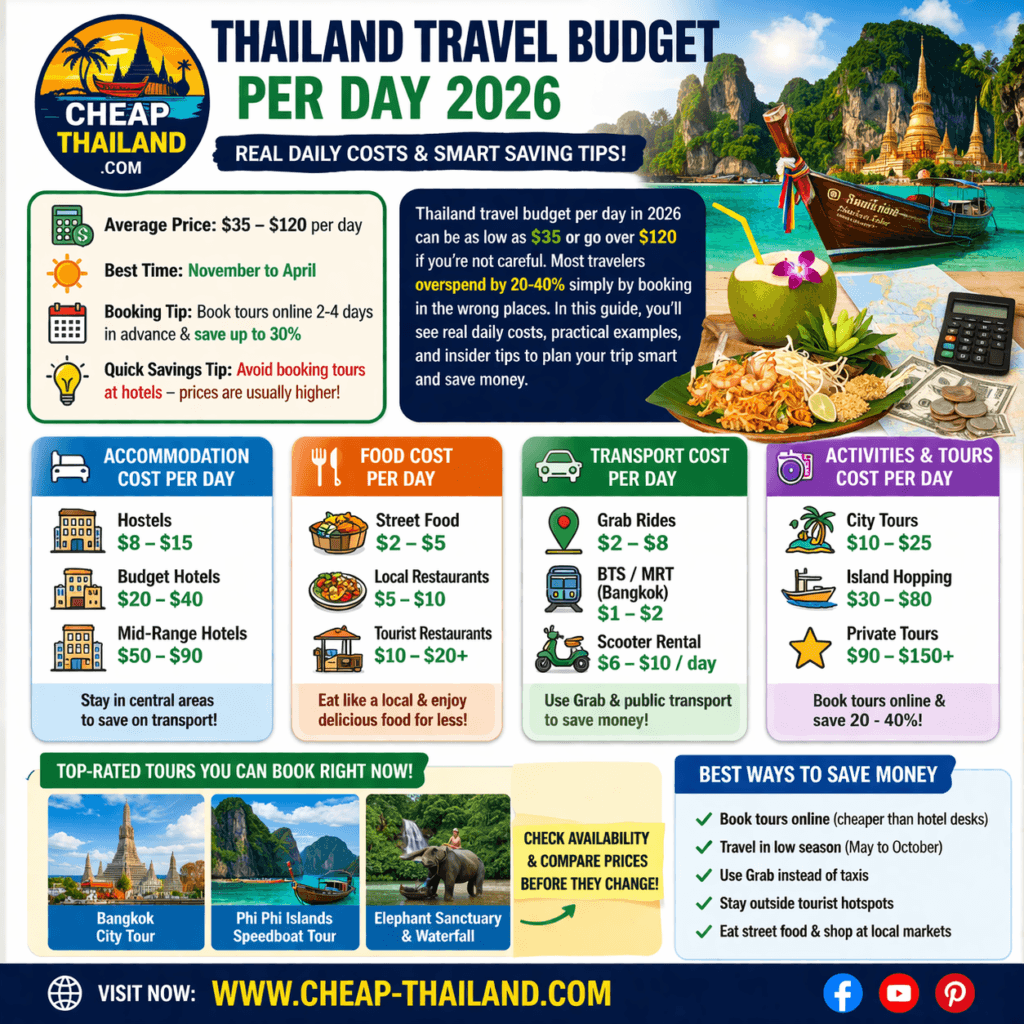
Thailand Travel Budget Per Day 2026: Real Daily Costs & What to Expect
- Average budget per day: $30–$80 USD (฿1,100–฿2,900) depending on your travel style
- Best time to visit: November to April (dry season, easier to plan around a budget)
- Booking tip: Book tours and accommodation 4–8 weeks in advance to lock in lower prices
- Quick savings tip: Eat at local markets and street stalls — a full meal costs $1–$2 USD vs. $8–$15 at tourist restaurants
Thailand is one of the most affordable countries in Southeast Asia — but “affordable” means very different things depending on how you travel. A backpacker sleeping in dorms and eating pad thai from street carts can get by on $30 a day. A couple staying in a sea-view resort with daily tours can easily hit $200+ per person. The real number for most first-time visitors lands somewhere in between: $50–$80 per day covers a comfortable private room, two solid meals, transport, and one activity or tour. This guide breaks it down honestly so you can plan without surprises.
One mistake most travelers make: they budget only for accommodation and flights, then get caught off guard by tour prices, tuk-tuk rides, and entrance fees that pile up fast. Factor those in from the start and you’ll have a much more realistic picture.
Daily Budget Breakdown by Travel Style
Here’s how a typical day breaks down across three types of travelers — all prices are per person in USD and Thai Baht:
- Budget traveler ($25–$40/day | ฿900–฿1,450): Hostel dorm ($6–$12), street food for all meals ($5–$8), local buses and songthaews ($2–$5), one free or cheap activity like a temple visit or beach day
- Mid-range traveler ($50–$90/day | ฿1,800–฿3,250): Private guesthouse or budget hotel ($20–$40), mix of local and sit-down restaurants ($12–$20), Grab rides and occasional tours ($15–$25), one paid tour or activity every few days
- Comfort traveler ($100–$180/day | ฿3,600–฿6,500): 3-star hotel or boutique resort ($50–$100), full meals at decent restaurants ($20–$35), private transfers and organised tours ($25–$45)
These aren’t luxury numbers. $180 a day does not get you a five-star resort — that’s a different bracket. This guide focuses on real value travel: good experiences without paying tourist-trap prices.
Here are some of the top-rated tours and experiences you can book right now to get an idea of what’s included in your daily activity budget:
Check availability and compare prices before they change — popular tours sell out weeks in advance during peak season.
Accommodation Costs in Thailand: What You Get for Your Money
Accommodation is usually the biggest daily expense, and prices vary a lot by location. Phuket and Koh Samui are noticeably more expensive than Chiang Mai or Pai. Bangkok sits in the middle — you’ll find great budget deals if you stay in areas like Silom, Ari, or even around Khao San Road.
- Hostel dorm bed: $6–$14 (฿220–฿500) — quality varies, but Bangkok has some of the best-value hostels in Asia
- Budget private room (fan, basic): $12–$22 (฿430–฿800)
- Mid-range guesthouse or hotel (AC, pool): $25–$55 (฿900–฿2,000)
- Boutique hotel or resort: $60–$120 (฿2,200–฿4,350)
During high season (November to February), prices go up 20–40% — especially in Phuket’s Patong Beach and Krabi’s Ao Nang. If you’re visiting then, book at least 6 weeks out. Low season (May to October) brings cheaper rooms but also monsoon rains in some areas, particularly on the west coast.
For a full breakdown of where to stay and which areas give you the best value, check out the guide on where to stay in Phuket or the best hotels in Bangkok for first-time visitors.
Food and Drink: Daily Costs and Where to Eat Smart
Food in Thailand is where your budget really stretches — if you eat where locals eat. A bowl of khao man gai (poached chicken rice) at a market stall costs 50–70 THB ($1.40–$2). Pad see ew at a night market runs about 60–80 THB ($1.70–$2.30). Even a proper sit-down Thai meal at a mid-range restaurant won’t usually top 200–300 THB ($6–$9) per person.
- Street food / market meal: 50–100 THB ($1.40–$2.90)
- Local restaurant (Thai food): 80–180 THB ($2.30–$5.20)
- Tourist-facing restaurant: 250–500 THB ($7–$14)
- Western food (burger, pizza): 250–600 THB ($7–$17)
- Fresh fruit shake or smoothie: 40–80 THB ($1.10–$2.30)
- Beer (Chang or Leo at a 7-Eleven): 45–60 THB ($1.30–$1.70)
From experience: the biggest food mistake tourists make is defaulting to restaurants that have English menus and photos on display. Those places charge 3–4x more for basically the same food. Head one street back from the beach or the tourist strip, find where locals are eating, and point at what looks good. It almost always works out.
Daily food budget estimates: $8–$12 for budget travelers eating street food; $18–$28 for a mix of local restaurants and the occasional sit-down meal; $35–$60 if you’re eating Western food or at hotel restaurants regularly.
Transport Costs: Getting Around Thailand Every Day
Local transport in Thailand is surprisingly cheap — but tourist-priced options can quietly drain your budget. Here’s what to expect:
- BTS Skytrain (Bangkok): 16–59 THB ($0.45–$1.70) per journey — the most efficient way around Bangkok
- Grab (taxi app): 80–200 THB ($2.30–$5.80) for most city rides — always cheaper than flagging a street taxi
- Tuk-tuk: 100–300 THB ($2.90–$8.60) — scenic, but negotiate before you get in
- Songthaew (shared pickup truck): 20–50 THB ($0.55–$1.45) — standard on Koh Samui and in Chiang Mai
- Scooter rental: 150–300 THB/day ($4.30–$8.60) — popular in Phuket and Pai, but check your travel insurance first
- Intercity bus (VIP): 300–600 THB ($8.60–$17) — great for Bangkok to Chiang Mai or similar routes
- Domestic flight: $20–$80 depending on route and how far in advance you book
Getting between cities by overnight train or VIP bus is one of the best budget moves in Thailand. You save a night’s accommodation cost while covering the distance — especially on the Bangkok to Chiang Mai route.
If you’re flying into Bangkok and need to get to your hotel or onward transport, the Bangkok airport transfer vs Grab guide breaks down exactly which option saves you the most money. For Phuket arrivals, see the Phuket airport transfer prices guide before you book anything at the airport desk.
Search for the best flight deals to Thailand before locking in your travel dates:
Flights are often the single biggest cost of a Thailand trip — locking in a good price early can free up hundreds of dollars for your daily budget once you’re there.
Activities and Tours: How Much Should You Budget Per Day?
This is where most travelers under-budget. Thailand has incredible experiences — island-hopping, cooking classes, temple tours, elephant sanctuaries, snorkeling — and they add up. Build at least $15–$30 per person per day into your activity budget, even if you don’t spend it every single day.
- Temple entry fees: Free to 200 THB ($0–$5.80) — most temples are free, major ones like Wat Phra Kaew charge 500 THB ($14.40)
- Cooking class: 800–1,500 THB ($23–$43) — worth every baht, especially in Chiang Mai
- Day tour to Phi Phi Islands from Phuket: 1,200–2,000 THB ($35–$58) depending on boat type
- James Bond Island or Phang Nga Bay tour: 900–1,800 THB ($26–$52)
- Elephant sanctuary (ethical): 2,000–3,500 THB ($58–$100)
- Snorkeling day trip: 800–1,500 THB ($23–$43)
- Muay Thai show ticket: 800–2,000 THB ($23–$58)
Booking tours online is almost always cheaper than booking at the pier or through your hotel. One tour operator at Ao Nang pier quoted 2,400 THB for a group snorkeling trip — the same tour was listed for 1,400 THB on GetYourGuide. That 30–40% difference matters when you’re doing several activities across a two-week trip.
For Phuket-specific tour costs and what’s worth booking, the Phuket tours prices guide has a full breakdown. If you’re heading to Krabi, check the best tours in Krabi before you arrive.
Best Way to Save Money on Your Daily Thailand Budget
Small decisions compound over a two-week trip. Here’s what actually moves the needle:
- Book flights 2–4 months in advance — prices spike in the 3–6 weeks before travel, especially for peak season dates in December and January. The flight booking timing guide has the data on the best windows.
- Always book tours online, never at the hotel desk — hotel staff earn commission and prices reflect that. Use GetYourGuide or Klook and you’ll consistently pay 20–40% less.
- Use Grab for all city transport — metered taxis and tuk-tuks in tourist areas have wildly inconsistent pricing. Grab shows you the price before you confirm.
- Stay in guesthouses, not resort areas — Phuket’s Patong Beach hotels cost 30–50% more than equally good hotels in Kata or Karon, just for the location name.
- Eat your biggest meal at lunch — many Thai restaurants offer lunch specials at 70–100 THB that would cost double in the evening.
- Avoid tourist-area exchange counters — airport exchange booths and hotel desks offer rates 5–10% worse than SuperRich or Vasu exchange booths found throughout Bangkok.
For a full picture of how Thailand’s costs compare to what people expect, the Is Thailand cheap or expensive guide covers it honestly.
Best Deals Right Now: Where Your Daily Budget Goes Further
Some destinations in Thailand offer dramatically better value than others for the same type of traveler. Here’s where $50/day goes the furthest right now:
- Chiang Mai — consistently the best-value city in Thailand. Accommodation, food, and tours all cost 20–40% less than Bangkok or Phuket. A private room with AC and pool access runs $18–$30/night.
- Pai — small mountain town north of Chiang Mai, very low costs, but limited in terms of activities beyond nature and relaxation
- Krabi (Ao Nang area) — slightly cheaper than Phuket for accommodation and tours, with access to the same Andaman Sea islands. The Krabi travel guide has full pricing.
- Phuket (Kata/Karon vs Patong) — staying 10 minutes from Patong Beach cuts your accommodation cost by 30% without giving up much in terms of access
Prices shift significantly around peak season (November to February) and again during Chinese New Year in late January. If your dates are flexible, traveling in October or early November gives you mostly dry weather in southern Thailand with off-peak prices still in effect. The cheapest month to fly to Thailand guide has specific data on when prices dip.
Here are some of the best-value tours and experiences to consider adding to your daily itinerary:
Check availability and lock in your spot — popular day trips fill up fast, especially on weekends during high season.
Sample Daily Budget: What a Real Day Looks Like
Here’s what a solid mid-range day in Thailand actually costs, based on Phuket as a base:
- Accommodation (private room, AC, pool): $35
- Breakfast at a local café: $3
- Lunch at a Thai restaurant: $5
- Dinner at a beachside restaurant: $12
- Grab rides (3 trips): $6
- Island snorkeling tour: $38
- Two beers in the evening: $4
- Total: ~$103/day per person
That same day on a budget — hostel dorm, all street food, shared boat tour booked online — runs closer to $45–$55. Comfort travelers adding a massage ($15–$25) and a nicer dinner bring it up to $130–$150. None of these include flights or visa costs, which are fixed regardless of daily spending.
For a complete trip cost calculation including flights, see the real trip cost to Thailand breakdown or the Thailand travel cost for 1 week guide.
Ready to start comparing tours and booking your activities ahead of time:
Book early, especially for peak season — availability on popular tours closes weeks in advance.
Frequently Asked Questions
How much money do I need per day in Thailand?
Most travelers need $40–$80 USD per day in Thailand for a comfortable experience including accommodation, food, transport, and one activity. Budget travelers can get by on $25–$35, while comfort travelers typically spend $100–$150. These figures don’t include international flights.
Is $50 a day enough for Thailand?
Yes — $50 per day is enough for a solid Thailand experience. At that level you can stay in a decent private room ($20–$30), eat well at local restaurants ($10–$15), and still have money for transport and the occasional tour. You won’t be splurging, but you won’t feel like you’re cutting corners either.
What is the cheapest city to visit in Thailand?
Chiang Mai is consistently the cheapest major city in Thailand for tourists. Accommodation, food, and tours all cost significantly less than Bangkok or Phuket. A comfortable guesthouse with pool runs $18–$28/night, and a full meal rarely tops $4 at local restaurants.
How much does a week in Thailand cost in total?
A week in Thailand costs roughly $350–$560 for budget travelers, $700–$1,100 for mid-range, and $1,200–$1,800+ for comfort travelers — excluding international flights. Flights from Europe or the US are typically the largest single cost of the trip. See the full week cost breakdown for detailed numbers by travel style.
Final Thoughts
Thailand remains one of the best-value travel destinations in the world in 2026 — but only if you spend your money in the right places. Eat local, book tours online, use Grab, and avoid the resort-area price premium on accommodation. A daily budget of $50–$80 per person covers everything you need for a genuinely good trip: good food, a comfortable place to sleep, reliable transport, and real experiences. Start by comparing flights and locking in your dates, then plan your daily activities from there.